At its peak in the 1920s, Ontario's rail network connected nearly every town with a post office to the outside world. Three major companies — the Grand Trunk Railway, the Canadian Pacific Railway, and the Canadian Northern Railway — along with dozens of smaller lines, built thousands of kilometres of track from the Niagara Peninsula to the shores of Hudson Bay. Today, most of that network is gone. The abandonment of branch lines across the province created ghost towns, severed communities from markets and services, and left behind a vast archaeological record of rock cuts, bridge abutments, and empty station platforms.
Building the Network
Railway construction began in earnest in the 1850s and continued for nearly seventy years. The first lines connected the major centres: Toronto, Hamilton, Kingston, Ottawa. Branch lines followed, reaching into the agricultural south, then pushing north into mining and forestry territory. Towns competed ferociously to attract rail service. Those that succeeded generally prospered. Those bypassed by the railway often stagnated.
Three lines are of particular interest for exploration:
The Kingston and Pembroke Railway (K&P) ran 174 kilometres from Kingston north through the Frontenac Axis to Renfrew. Built between 1872 and 1884, it was nicknamed the "Kick and Push" for its notoriously rough ride through the Canadian Shield. The line hauled iron ore, mica, and feldspar south to Kingston, and supplies north to the mining and logging operations. Abandoned in sections between the 1960s and 1986, its rock cuts and bridge abutments are among the most dramatic rail remnants in the province.
The Ottawa, Arnprior and Parry Sound Railway (OA&PS) was J.R. Booth's personal project. The lumber baron built the line in the 1890s to move grain from Georgian Bay to his Atlantic shipping connections, bypassing the Montreal bottleneck. The route ran from Ottawa through Arnprior, across Algonquin Park, and down to Depot Harbour on Georgian Bay. Depot Harbour, now a ghost town, was once one of the busiest ports on the Great Lakes.
The Temiskaming and Northern Ontario Railway (T&NO) was built by the provincial government starting in 1902 to open up the northern mining frontier. During construction, workers discovered the silver deposits that triggered the Cobalt rush of 1903. The railway created the towns that served the silver mines, and later extended north to serve the gold fields around Timmins and Kirkland Lake. It is now the Ontario Northland Railway.
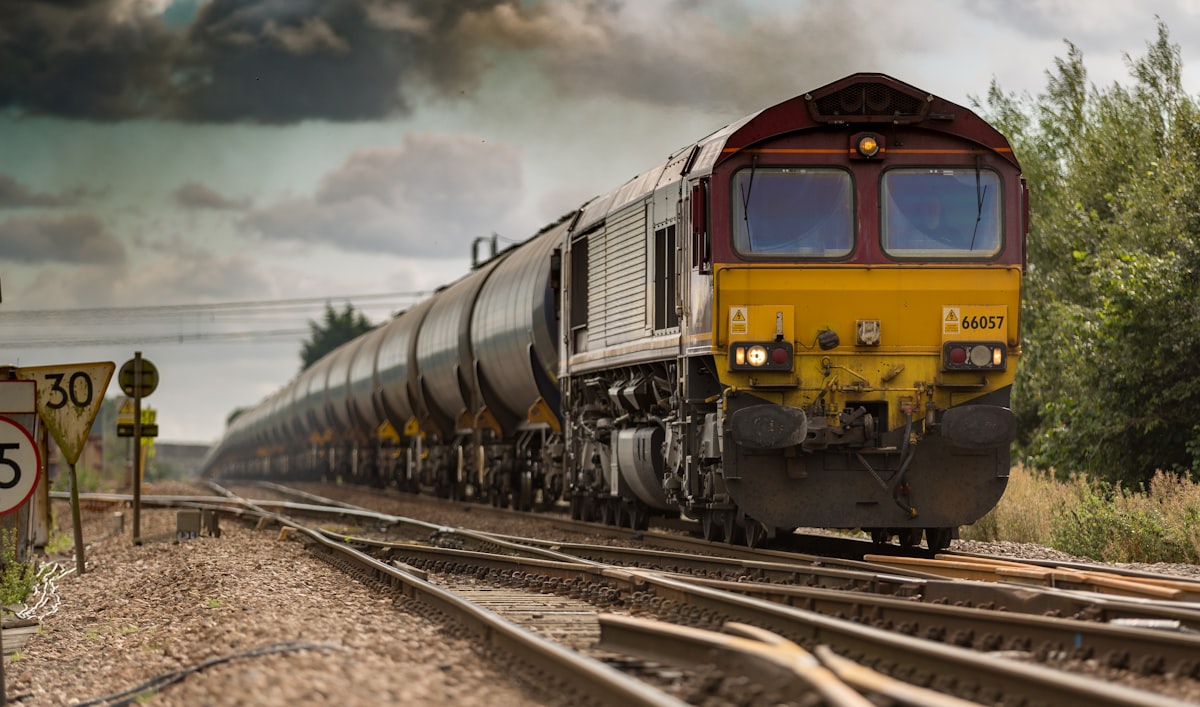 Abandoned rail lines crisscross Ontario, their overgrown grades marking routes that once connected every small town.
Decline and Abandonment
Railway abandonment happened in waves. The first casualties were the most marginal branch lines, many never profitable. The 1923 consolidation of the Grand Trunk and Canadian Northern into Canadian National led to rationalization of duplicate routes. The automobile and truck killed most passenger and light freight services by mid-century.
The most dramatic wave came in the 1980s and 1990s, when deregulation and CN restructuring closed hundreds of kilometres of branch lines. Towns that had been served by rail for over a century lost their connections overnight. Stations were closed, tracks pulled, rights-of-way sold. The Ottawa Valley, Eastern Ontario, and the Near North all lost significant portions of their rail networks during this period.
What Remains
Rail corridors are among the most enduring marks humans have left on the Ontario landscape. The graded roadbed, cut through rock and built up across valleys, persists for decades after the rails are removed. Rock cuts through the Canadian Shield will last for centuries. Bridge abutments of massive cut stone or poured concrete are virtually indestructible. Station buildings have had mixed fates: some preserved as museums, others converted to restaurants or houses, many demolished.
The conversion of abandoned rail corridors to recreational trails has been one of the more successful heritage outcomes. The Cataraqui Trail, the K&P Trail, the Algonquin rail trail, and sections of the Trans Canada Trail all follow former rail routes. These trails pass through rock cuts, over former bridge sites, and past station locations. Walking or cycling them gives a perspective on the landscape that roads cannot provide, because railways were engineered for gentle grades and sweeping curves through terrain that roads climb over or tunnel through.
Railways and Ghost Towns
The relationship between railways and ghost towns runs in both directions. Railways created towns: Depot Harbour existed only because of Booth's OA&PS. The Cobalt settlement existed because of the T&NO construction crew that stumbled on silver. And railways killed towns when they left: communities along the K&P that had depended on rail access for decades lost their economic lifeline when the line was abandoned.
Understanding Ontario's rail history is essential context for understanding why the province looks the way it does. The pattern of settlement and abandonment across the Shield and the north is largely a railway story. Towns that got rail service thrived. Towns that did not, or that lost it, withered.